Web Development - Scalable enterprise web application development

Web Development: Modernizing Legacy Enterprise Systems with Scalable Web Applications

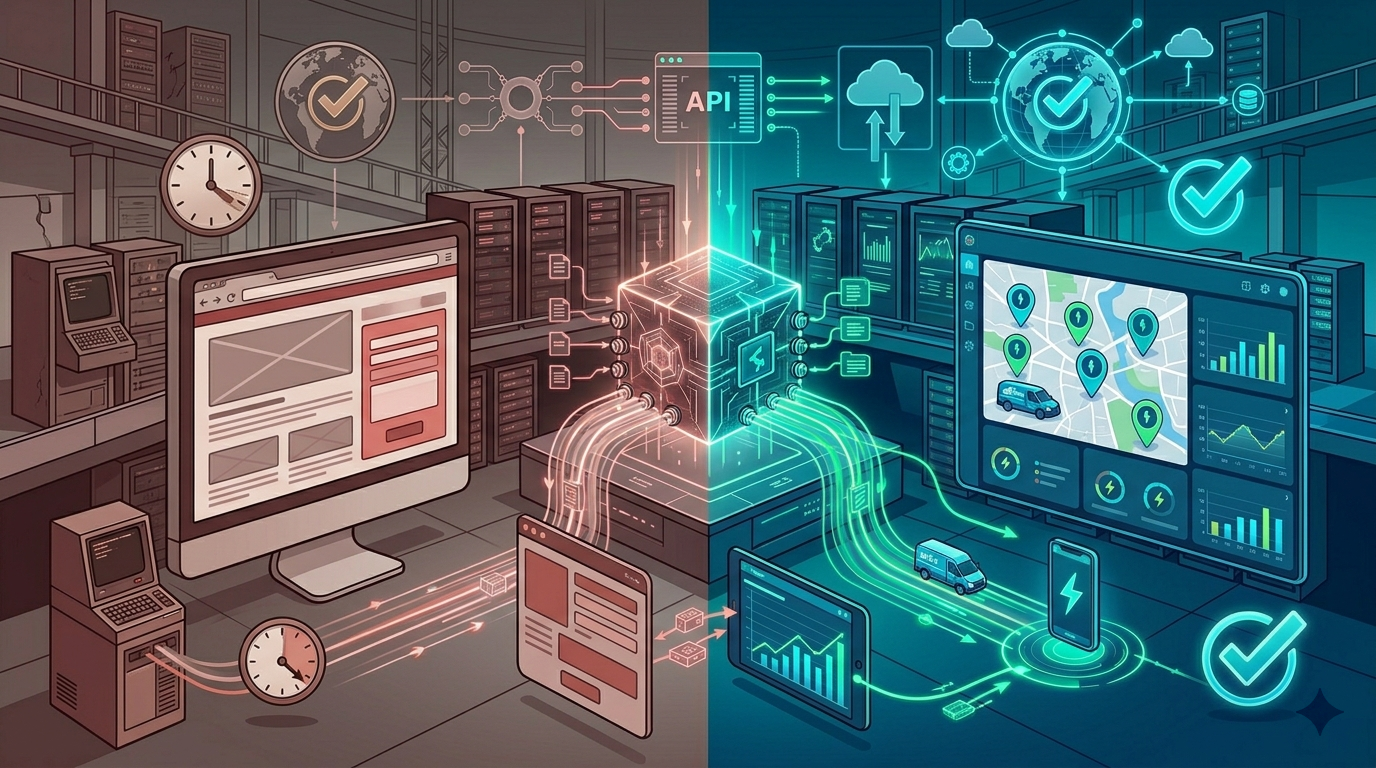
A global manufacturing conglomerate with 50+ distributed factories, 10,000+ employees, and decades-old legacy systems struggled with slow, disconnected web portals, inconsistent user experiences, and inability to scale during peak demand. Spundan led a complete digital transformation initiative, rebuilding their monolithic web platform into a modern, microservices-based architecture with React frontends, achieving 99.99% uptime, 4x performance improvement, and seamless global operations across 12 countries.

The Challenge

The manufacturing company's web infrastructure was failing to meet the demands of modern digital operations, creating bottlenecks across production, supply chain, and customer experience:

The Solution: Modern Microservices Architecture with React Frontend

Spundan architected and delivered a completely modernized web platform using React, Node.js microservices, and cloud-native infrastructure:

  1. Microservices Backend: Decomposed monolithic backend into 15+ domain-specific microservices (inventory, orders, procurement, shipping, HR, analytics) using Node.js and Python — each independently deployable and scalable.
  2. React Frontend: Built a unified single-page application (SPA) with React and TypeScript, featuring component-based architecture, state management with Redux Toolkit, and real-time updates via WebSockets.
  3. Progressive Web App (PWA): Enabled offline capabilities, push notifications, and installable experience for field teams — accessible on any device with native-like performance.
  4. API Gateway & Authentication: Deployed Kong API Gateway with OAuth2/OIDC integration, SSO across all portals, and fine-grained RBAC for 10,000+ users across 5 roles (admin, manager, staff, customer, vendor).
  5. Real-Time Dashboards: Built interactive analytics dashboards with Chart.js and D3, showing live production metrics, inventory levels, order status, and shipment tracking aggregated from all microservices.
  6. Search & Filtering: Implemented Elasticsearch-powered global search across orders, products, inventory, and documents — reducing information lookup time from minutes to milliseconds.
  7. CI/CD & Cloud Deployment: Automated build-test-deploy pipelines using GitHub Actions and ArgoCD, deployed on Kubernetes across AWS regions for high availability and geographic distribution.
  8. Performance Optimization: Applied code splitting, lazy loading, CDN distribution, image optimization, and Redis caching — achieving sub-2-second page loads globally.

Implementation Steps

The web modernization project was executed in phases, ensuring zero downtime and continuous business operations throughout the transition:

Results

The web transformation delivered exceptional improvements in performance, reliability, user satisfaction, and development velocity:

Conclusion

The web development transformation proved that modernizing legacy enterprise systems is not just possible but essential for remaining competitive. By moving from a fragile monolithic architecture to scalable microservices and a modern React frontend, the manufacturing company unlocked unprecedented performance, reliability, and development agility. The new platform now serves as the digital backbone for global operations, enabling real-time decision-making, mobile workforce productivity, and exceptional customer experiences. Within 12 months, the company launched 20+ new features that would have taken 3+ years in the old system, directly driving revenue growth and operational excellence.